Follow the Joining Slopes
- Roof valley repair addresses the drainage channel where two inward-facing slopes meet, including the covering and layers beneath it.
- Dormers add small roofs and wall joints that need their own flashing connections to the main slope.
- Your roofer traces the water route before defining the repair; an indoor stain can sit below a different entry point.
Valleys and Dormers Concentrate Water at Joints
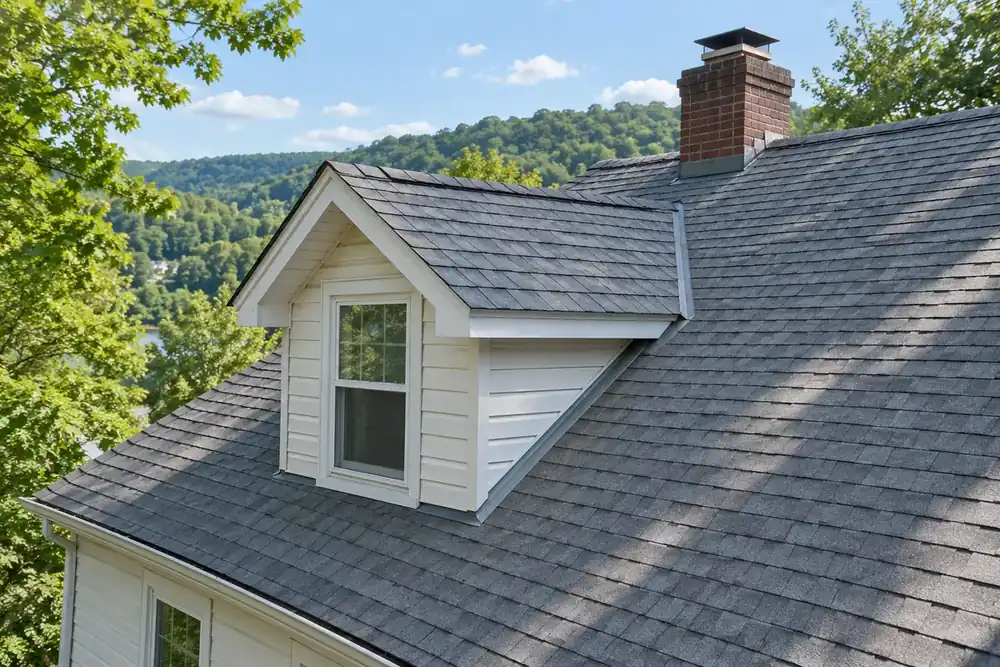
A roof valley channels runoff where two inward slopes meet, while a dormer projects from the main roof with its own walls and small roof. Both roof features add junctions that a plain, uninterrupted slope does not have. Repair starts by identifying how the covering, flashing and underlying layers meet at the affected junction.
A Gable Intersection Creates an Inward Channel
A valley gathers water from both adjoining roof planes and carries it toward the eave. Those converging slopes need a clear drainage route. A roof valley leak may begin at damaged covering, a failed lining or a poorly connected upper junction.
Open metal valleys leave a visible strip between the shingle edges. Woven valleys carry shingles from opposite slopes across the channel in alternating courses. The correct pattern depends on the product; ask your roofer which valley method suits the chosen shingles.
That difference matters when the written scope names roof valley flashing. Ask whether the work replaces exposed metal, changes shingle courses, renews underlying protection or combines those tasks. A visible metal strip is only part of the joint; the edges and concealed layers still have to work together.
Gabled and Shed Dormers Add Wall Connections
A gabled dormer has small pitched slopes above its front and sidewalls; a shed dormer has a single sloping roof. Where a shingled main roof runs beside either dormer's wall, step flashing connects successive courses to the wall detail. PNNL's existing roof-wall guidance explains how flashing joins the roof and wall drainage layers.
The uphill junction also needs a drainage plan. Where a roof ends against the back of a dormer wall, a formed back gutter collects the approaching runoff and directs it onto a draining roof surface. Your roofer assesses that connection separately from the flashing down the sides.
A hip roof may include dormers or adjoining wings too. Name the inward channel or wall where the problem appears, rather than assuming every sloping junction is a valley: an outside hip sheds water away from its crest.
Chimneys Need Side Flashing and an Uphill Detail
Roof repair around a chimney addresses the base junctions and the water approaching from above. Step flashing serves the shingled sides, counterflashing protects the upper edges against the masonry, and the uphill side needs a pan or a shaped diverter suited to the roof.
A back gutter collects and redirects water; a cricket creates a small raised roof section that divides the flow. Your roofer determines which detail fits the obstruction and surrounding slopes.
Describe the Location and the Visible Change
The useful call details are where the symptom appears, which roof features sit above it and whether the mark is spreading.
| Where | What it is | What goes wrong | What to say on the call |
|---|---|---|---|
| Inward roof junction | Valley channel between slopes | Covering, lining or overlaps allow water beneath the roof | Describe the stain below the channel and when it becomes wet |
| Dormer sidewall | Roof-to-wall flashing connection | Water reaches a gap in the connected layers | Name the side with visible gaps or indoor staining |
| Uphill dormer wall | Back gutter or pan where the roof meets a wall | Runoff loses its route around the obstruction | Describe water marks near the wall's upper junction |
| Chimney base | Side flashing, counterflashing and an uphill drainage detail | Separated or worn pieces let water enter | Mention rust streaks or a stain below the chimney |
| Shallow dormer top | Low-slope covering with perimeter details | Seams, edges or drainage connections fail | Say whether water appears beside the dormer or below its roof |
Rust streaks and visible gaps are clues you can report from the yard. If daylight around a roof joint is already visible from a safely accessible indoor space, mention it without entering a cramped or unfinished attic to investigate. Your roofer assesses the concealed condition; the stain's position alone does not locate the opening.
A Small Dormer Still Needs a Complete Scope
The pitch, covering, wall access and decking condition determine the work needed to replace a dormer's roof. A compact roof can involve several short edges and difficult junctions. A low-slope dormer also needs attention to membrane type, drainage, wall upstands and its connection to the main roof. Compare flat roof repair with work on the adjoining pitched section.
Chimney Caps Are Discussed Separately
Some roofers install chimney caps; discuss work at the chimney top separately from flashing at its base because they address different openings. One of our local roofing companies will identify the roof work involved and discuss the price after explaining the affected layers and access needs, before work begins.
Roof Access and Junction Repairs Belong With Your Roofer
Your roofer handles valley and dormer repairs because inspecting the hidden overlaps requires safe roof access and knowledge of the connected layers. Look only from the ground or a safe indoor position, and keep off ladders and roof surfaces.
Call while the problem is visible; no measurements or close-up roof inspection are needed from you. Move belongings away from drips and set out a bucket where the ceiling is sound. Avoid rooms beneath bulging or sagging ceilings. If water is near a light, leave its switch off and keep clear of the fixture and wiring.